Mental Health and Wellbeing
Pupil Counselling service

Pupil Counselling Service
Mr Rizwan Rehman – School Counsellor
At Blessed Trinity, we recognise that a young person’s emotional well-being plays an important role in their happiness, relationships, learning and overall development. School life, friendships, family circumstances and the challenges of growing up can sometimes feel overwhelming. Our pupil counselling service provides a safe, supportive and confidential space where young people can talk openly about their thoughts, feelings and experiences without fear of judgement.
I am Rizwan Rehman, the school counsellor at Blessed Trinity. My role is to support pupils who may be experiencing emotional, social, personal or family difficulties, helping them to better understand themselves and develop ways of managing the challenges they face. I work with young people at their own pace, recognising that every pupil is different and that there is no single approach that works for everyone.
How can counselling help?
Pupils may benefit from counselling for a wide range of reasons, including:
- Anxiety, worry, stress and low mood.
- Friendship difficulties, bullying and peer pressure.
- Family changes, conflict and relationship difficulties.
- Bereavement, loss and other significant life events.
- Low self-esteem, confidence and difficulties with self-worth.
- Managing anger, frustration and overwhelming emotions.
- Difficulties with motivation, school attendance or the pressures of school life.
- Changes, transitions and challenges associated with growing up.
- Coping with difficult experiences and developing emotional resilience.
Sometimes, a pupil may not know exactly what is troubling them. They may simply feel unhappy, confused, withdrawn or overwhelmed. Counselling offers an opportunity to explore these feelings, make sense of what is happening and identify what might help.
My role as a school counsellor
My approach is person-centred, which means that I place the young person at the heart of the counselling process. I aim to build a trusting therapeutic relationship where pupils feel listened to, respected and understood. I recognise that young people are the experts in their own experiences, and I work collaboratively with them to explore their concerns, identify their strengths and find ways forward that feel right for them.
Through counselling, pupils can develop a greater understanding of their emotions, recognise patterns in their thoughts and behaviour, strengthen their self-confidence and explore healthier ways of responding to difficult situations. Sessions may also help pupils develop practical coping strategies, improve communication, navigate relationships and feel more confident in expressing their needs.
I aim to provide a calm, compassionate and non-judgemental space where pupils can be themselves. They do not need to have all the answers or know exactly what to say. Sometimes, having the opportunity to talk, reflect and feel understood can be an important first step towards positive change.
What happens during counselling?
Counselling sessions are tailored to the individual pupil and their needs. Some young people may want to talk through a particular concern, while others may need more time to understand their feelings or explore what is happening in their lives. Depending on their age, preferences and circumstances, sessions may include conversation, reflection, activities and other appropriate therapeutic approaches.
The work may focus on understanding emotions, building confidence, exploring relationships, developing coping skills or identifying personal strengths and resources. The aim is not to tell pupils what to do, but to help them make sense of their experiences, consider their options and develop the confidence to make their own informed choices.
Confidentiality and emotional safety
Confidentiality is an important part of counselling because it helps pupils feel safe enough to speak honestly. What a pupil shares is treated respectfully and kept private within the limits of confidentiality. However, if there are concerns that a pupil or someone else may be at risk of harm, information may need to be shared with the appropriate people to help keep them safe. These limits are explained in an age-appropriate way.
Counselling is not about blame or judgement. It is an opportunity for pupils to be heard, understood and supported while working through whatever may be affecting them.
How are pupils referred?
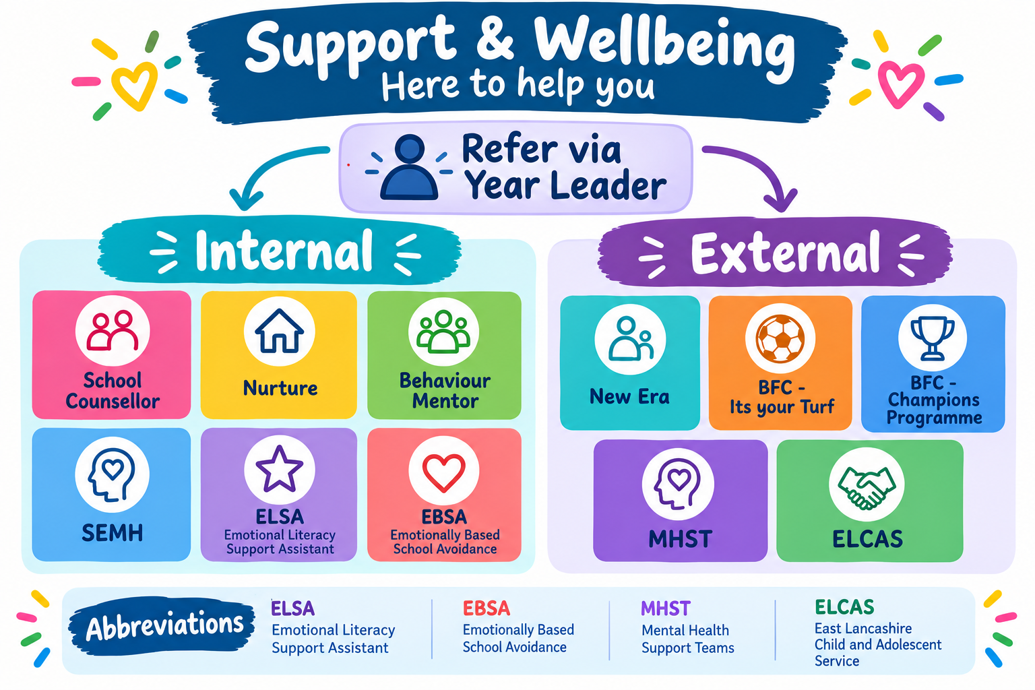
Pupils may be referred to the counselling service through their Year Leader, the Pupil Support Panel or other appropriate members of staff. Where appropriate, a pupil may also express an interest in accessing support through the school's agreed referral process.
Following a referral, their needs are considered so that the most appropriate support can be identified. Counselling may be short-term or continue for a longer period, depending on the pupil's circumstances and progress. Support is reviewed regularly to ensure that it remains helpful and appropriate.
Session arrangements
Sessions usually take place weekly in a private room within school and generally last between 40 and 60 minutes. Appointments are arranged around the school timetable, with consideration given to minimising disruption to learning. The length and frequency of support may vary according to individual needs.
Working together to support our pupils
My aim is to help young people feel heard, valued and better equipped to manage the challenges they encounter, both in and beyond school. By supporting pupils to understand their emotions, recognise their strengths and develop effective coping strategies, counselling can contribute to their emotional well-being, personal development and ability to engage positively with school life.
Every young person deserves the opportunity to feel supported and understood. The counselling service is here to help pupils navigate difficult times, build resilience and move forward with greater confidence.
Nurture
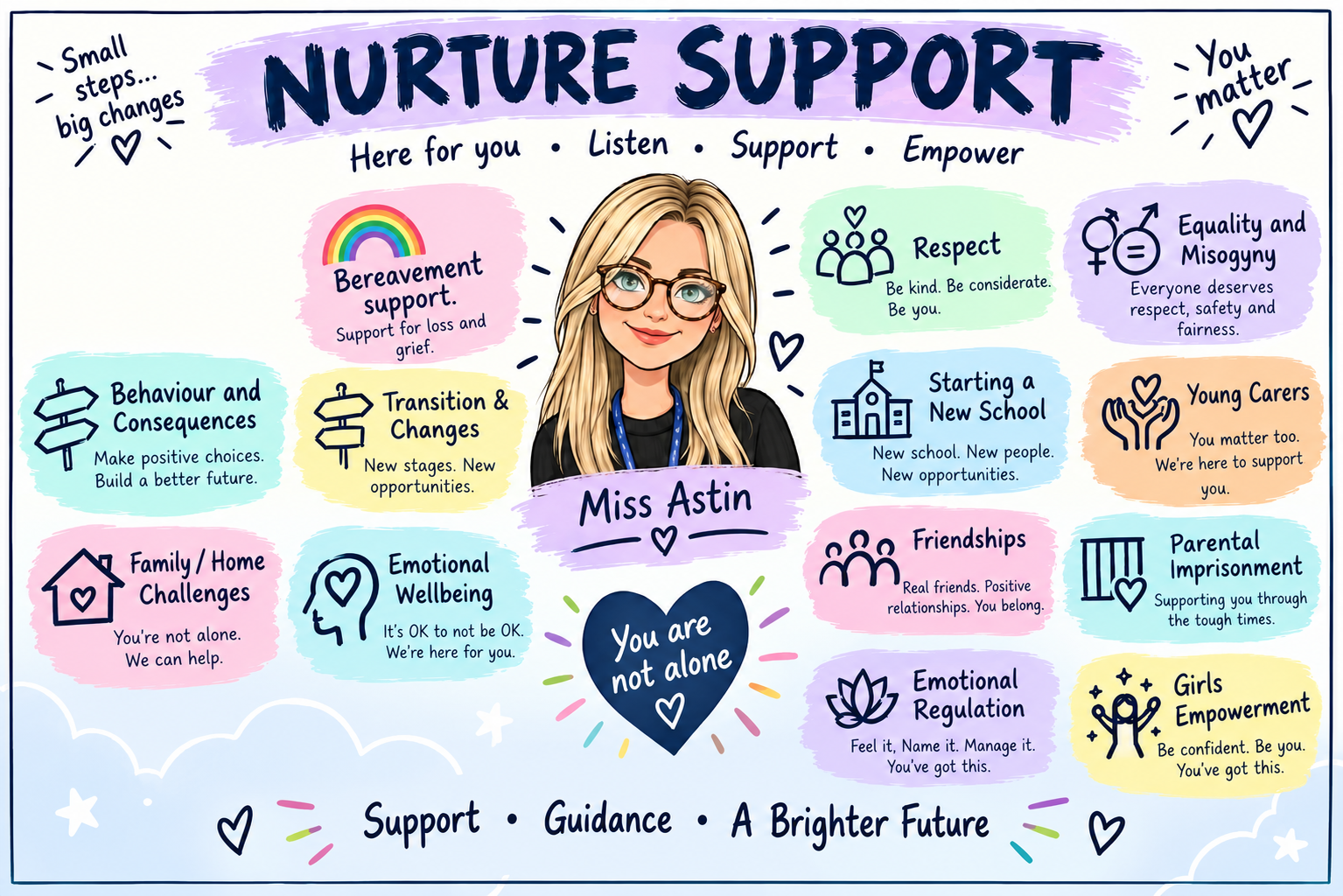
Our Nurture Lead is Miss Astin. At Blessed Trinity RC College, we recognise that every pupil has individual needs, experiences and challenges that can affect their wellbeing, relationships and engagement with learning. The Nurture provision offers a safe, supportive and understanding environment where pupils can feel listened to, build confidence and develop the skills they need to thrive both in school and beyond.
Through individual support and small-group sessions, we help pupils develop emotional resilience, self-esteem, positive relationships and strategies for managing challenges. Our provision supports pupils experiencing difficulties at home, friendship concerns, bereavement and loss, anxiety, challenges with transition and other barriers to learning.
The sessions can range from short check-ins to 45-minute sessions. Pupils are referred to Nurture by their Year Leader and Miss Astin will work with the child for 2-8 weeks.
Young Carer’s
A Young Carer is a child or young person who provides care, help or support to a family member who may have a physical disability, illness, mental health difficulty or substance misuse problem.
In school the designated Young Carer’s Champion is Miss Astin. At Blessed Trinity RC College, we recognise that having caring responsibilities can affect a young person's emotional wellbeing, friendships, attendance and ability to concentrate on learning. We aim to ensure that our young carers feel recognised, understood and supported.
Miss Astin works to identify Young Carers and ensure they know who to go to for support.
Support may include:
- A trusted adult who completes regular check-ins.
- Help accessing school-based and external support.
- Referrals to specialist external services such as Barnardo’s.
- Support balancing caring responsibilities with schoolwork.
- Young Carer’s passport that it shared with teachers.
Parental Imprisonment
We understand that having a parent or close family member in prison can bring a range of emotions. Children may experience worry, sadness, confusion, stigma and changes in family circumstances.
At Blessed Trinity RC College our Parental Imprisonment Lead is Miss Astin. We recognise that every family’s circumstances are different and support should be tailored to meet the needs of the child. We understand that pupils should never be defined by the actions and consequences of the person in prison.
Support may include:
- A trusted adult who completes regular check-ins.
- Support before and after visiting their parent.
- Appropriate support around authorised visits to their family member in prison.
- Communication with the parent in prison via reports, letters etc.
- Referrals to specialist external services such as Children Heard and Seen, Barnardo’s and PACT.
Miss Astin approaches this intervention with compassion, respect and discretion in the hope that pupils feel safe, included and supported to share worries or concerns.
Miss Emma Watkinson, Social and Emotional Mental Health and EBSA Lead
Our Social Emotional and Mental Health lead is Miss Watkinson. Her role at Blessed Trinity is to provide Social Emotional and Mental Health (SEMH) sessions to referred students. Sessions will take place in a private confidential space where students can discuss mental health issues that may be affecting them in or out of School, such as relationships, low self-esteem, anxiety, low mood or bereavement. Sessions are 1 hour and will usually take place for six-weeks, depending on the need of the student. We try to provide sessions during non-core lessons having as little effect on their education as possible.
Pupils are referred via their year leaders and pupil panel and will be supported by Mrs Watkinson who will plan 1 hour, one to one session for a six-week period, providing coping strategies which will best help individual students, whilst building an empathic, non-judgmental and supportive relationship. We believe that good mental health and wellbeing is essential for students. It helps them to learn effectively, cope with day-to-day challenges, past trauma and develop into resilient, confident young adults.
Miss Watkinson is also our Emotionally Based School Avoidance lead (EBSA)
She will support students who experience challenges in attending school due to negative feelings (such as anxiety). EBSA is commonly associated with emotional and physical distress, and a reluctance to attend school therefore often leading to reduced attendance and further anxiety regarding school. It is important that interventions are provided early on to prevent persistent absence.
Miss Watkinson will address an individual’s EBSA and discuss the underlying reasons for the school avoidance. Interventions can take place in school in a private space or at home if required. A plan will be put in place with the support of parents/carers focusing on meeting the child’s needs and their perceived reasons for school avoidance whilst maintaining a rapport with the child and providing support throughout the process with the aim to improve their attendance and for the students to ultimately enjoy their experience and thrive here at Blessed Trinity.
Mrs Nicola Daulton - Assistant SENDCO and Cognition and Learning Lead
I am a dedicated, caring and child-focussed education professional committed to supporting every learner to overcome barriers to learning, develop confidence and achieve their full potential. In my role as Assistant SENDCO and Cognition and Learning Lead, I focus on identifying individual needs, understanding each child’s learning profile and ensuring that pupils receive appropriate, targeted support to help them succeed academically, socially and emotionally.
I believe that every child deserves the opportunity to thrive, regardless of their individual needs or challenges. My approach is rooted in inclusion, early identification, personalised intervention and a strong belief that, with the right support, every learner can make meaningful progress.
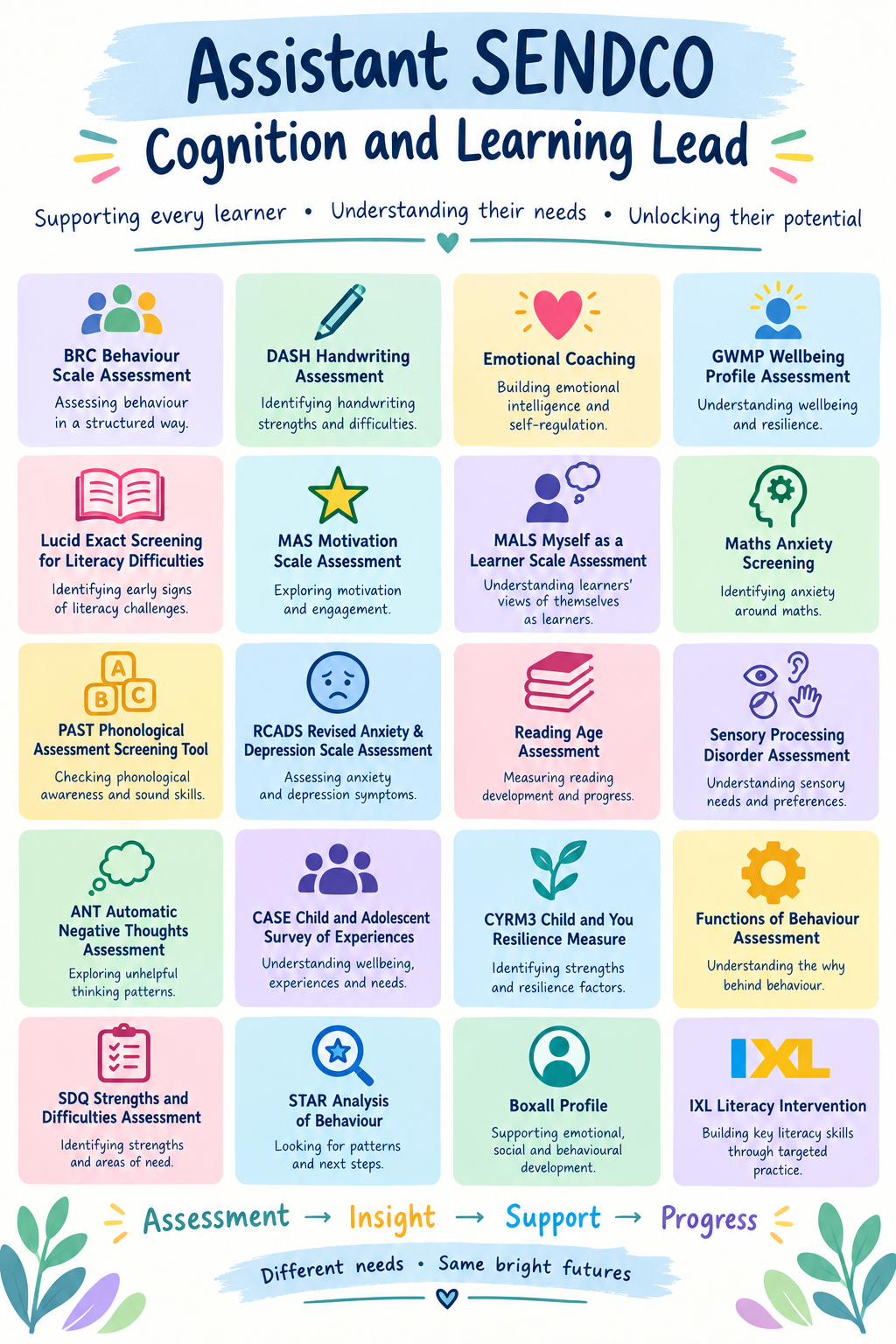
A key part of my role involves using a wide range of assessments and screening tools to develop a deeper understanding of pupils’ strengths and areas for development. These include assessments relating to behaviour, cognition and learning, literacy, handwriting, phonological awareness, motivation, emotional wellbeing, anxiety, sensory processing and resilience. I use assessment information to help identify barriers to learning, inform next steps and support the development of appropriate strategies and interventions.
I am particularly passionate about recognising the connection between emotional wellbeing and learning. Through approaches such as emotional coaching, wellbeing assessments and the exploration of pupils’ experiences, I aim to help children develop emotional literacy, self-regulation, resilience and a positive sense of themselves as learners. I understand that behaviour can communicate an unmet need, and I value approaches that seek to understand the reasons behind a child's behaviour rather than focusing solely on the behaviour itself.
As Cognition and Learning Lead, I am committed to supporting pupils who experience difficulties with literacy, handwriting, reading, motivation and other aspects of learning. I value the importance of targeted interventions, careful monitoring and reviewing progress to ensure that support remains purposeful and responsive to individual needs.
My work is guided by a strengths-based and child-centred philosophy. I believe that effective SEND provision begins with understanding the whole child: their abilities, experiences, interests, emotional needs and aspirations. By bringing together assessment, professional insight and compassionate support, I aim to help pupils feel understood, valued and empowered to engage with their learning.
Ultimately, my goal is to work collaboratively with colleagues, families and other professionals to create an inclusive learning environment where every child has the opportunity to flourish. I am passionate about turning assessment into insight, insight into support, and support into progress.
I believe that different needs should never mean limited opportunities. Every child has potential, every learner deserves to be understood, and every small step forward is worth celebrating.
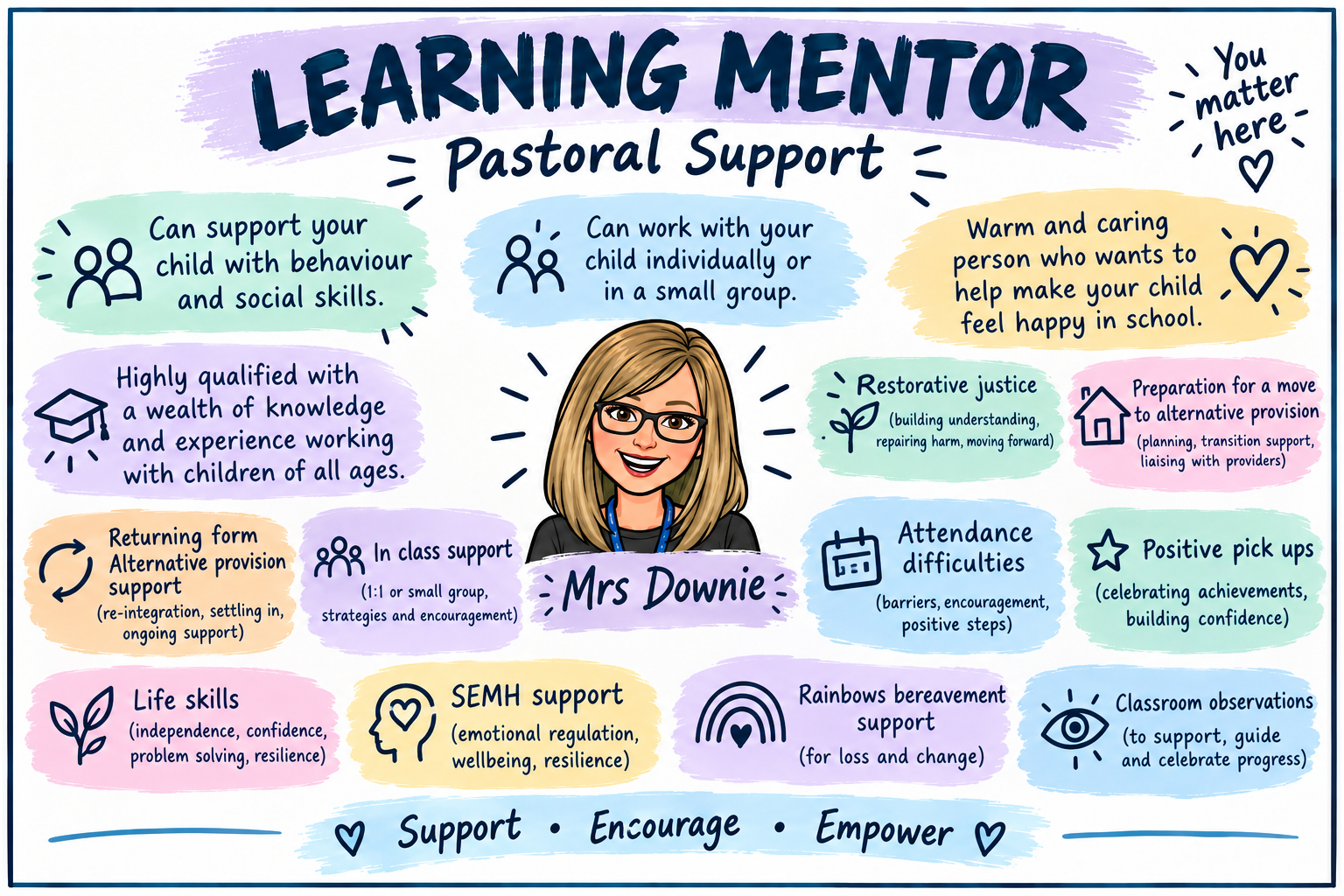
Mrs Jackie Downie
Mental Health First Aiders
Level 3 Supervising first Aid for mental health:

Miss L Place
Level 2 Award in First Aid for Mental Health:
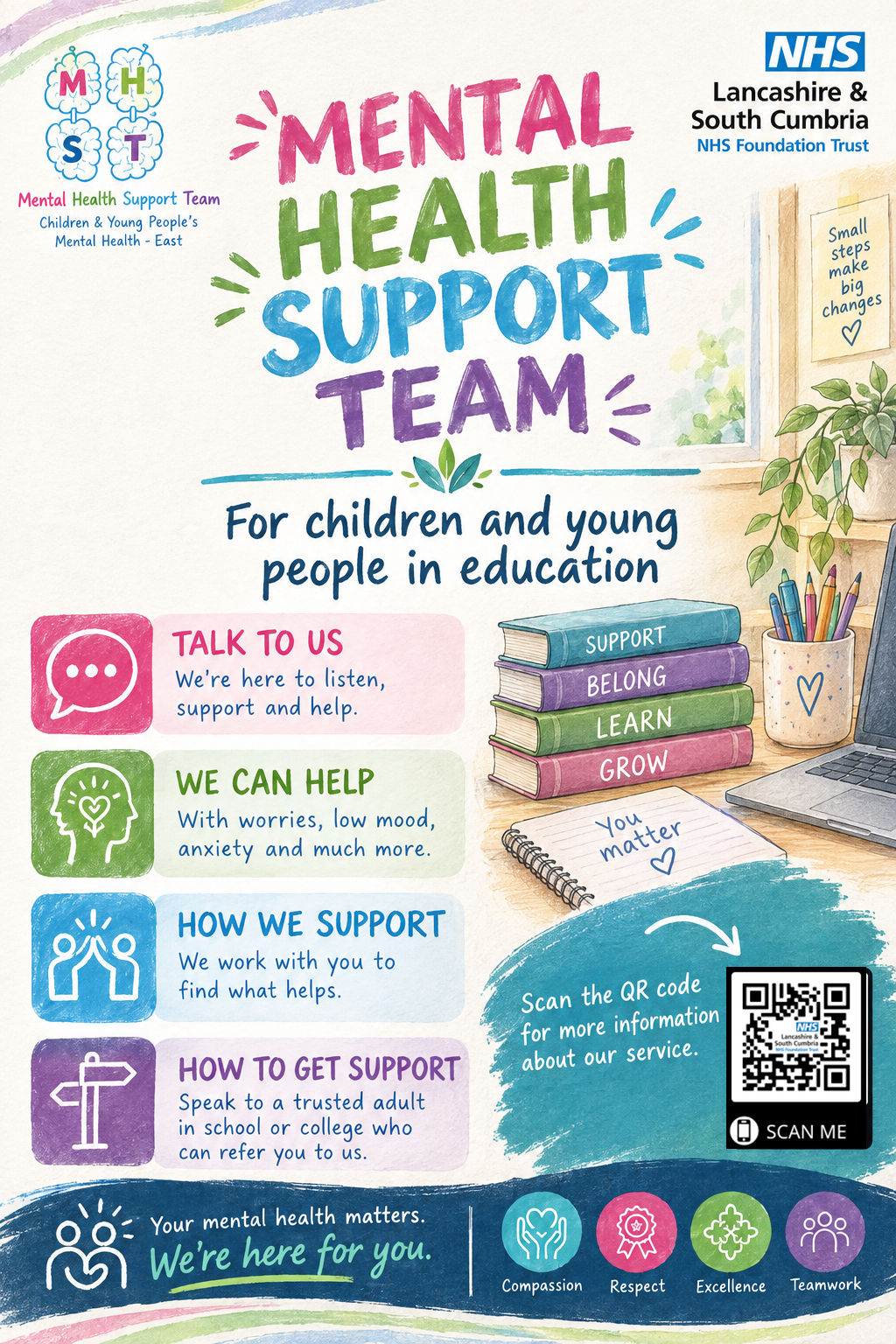
Mental Health Support Teams (Schools)
East Lancashire Child & Adolescent Service (ELCAS): https://elht.nhs.uk/services/mental-health-support-teams-school-based